Choose a recorded comparison
Setting — / 625Five prospective ML proposals, the reference and one adverse development example. These seven examples are not the separate 40 fresh validation settings. The original study used 625 possible settings; this viewer offers seven saved examples.
Curved room
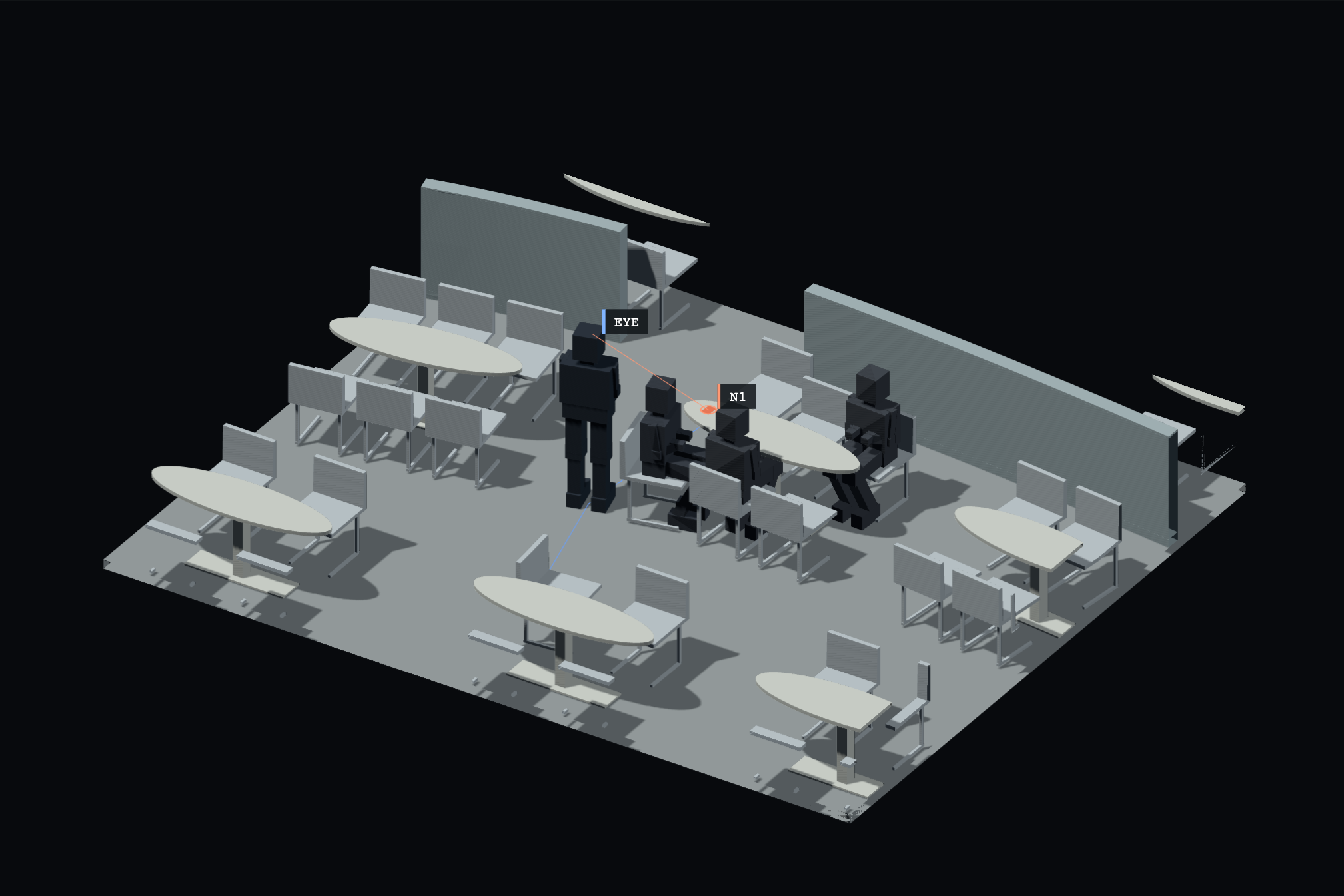
N1 is an alternative use of an existing seat. The retained section is a visibility view; amber lines are sightlines, not air paths.
Seat map: choose a seat to inspect its predicted and checked values.
Exposure, place by place
—
Loading saved results…
—
What the learning has actually shown
Evaluation in progressThe two model versions are frozen before 40 previously unsimulated settings are revealed. The separate Codex evaluation is complete; its aggregate results load below.
A fast preview is a different claim from a better optimiser. V120's search tie is preserved. This instrument has a fixed geometry and a bounded menu; its results do not establish physical smell comfort or fan-energy savings. No new air setting has been adopted.
Data come from original virtual tracer simulations. N1, C1 and F1b are seat / journey locations, not participants. Both rooms retain 72 seats.
Minimum band width applies to 99.74% of fresh outputs. Coverage does not establish calibration of GP uncertainty alone. Read the limits and costs. Recorded metrics and model hashes.